Announcing the EEF 2026 board election candidates
About the election
The Erlang Ecosystem Foundation is set up as a community organization, to be run for and by the community. As such, the role of board member is assigned by a democratic process, where voting members get to run and vote for their preferred candidates.
The process to be followed is described in legalese in our bylaws, but this page will explain more clearly how we plan for this to be working forwards.
Important Dates
The following dates are important to the campaign:
- April 9th: Elections announced
- April 23rd: Members can submit their candidacy
- May 7th: Last day to submit your candidacy and email acceptance ends at 23:59 UTC
- May 8th: Votes are open at 16:00 UTC
- May 15th: Votes are closed at 23:59 UTC
Election results will be announced as soon as possible after closing.
You need to be a voting member as of May 7th to take part in the elections.
Who are the Outgoing Board Members?
While the founding members assigned themselves to be part of the board as part of the initial bootstrapping effort, the board has been randomly divided into three cohorts, A (containing 4 members), B (4 members), and C (3 members). To ensure continuity, only one cohort is re-elected each year. This means that you will be elected for 3 years at a time.
Here are the cohorts as defined until the next election with their present members:
A, to be re-elected in 2026, 2029, and every three years after:- Sebastian Strollo (current Secretary)
- Amos King
- Alistair Woodman (current President)
- Francesco Cesarini
B, to be re-elected in 2027, 2030, and every three years after:- Miriam Pena
- Peer Stritzinger
- Kiko Fernandez-Reyes
- Bryan Paxton
C, to be re-elected in 2028, 2031, and every three years after:- Lars Wikman
- Lee Barney
- Zach Daniel
For this year’s election, members of cohort A are to be elected, so the seats of Sebastion, Amos, and Francesco, and Alistair are open.
How to Vote
You first have to have the right to vote, as a voting members. Voting members are members who have done the following:
- registered as a paying member as of May 7th, paying their yearly membership or having paid for a lifetime membership
- acted as a contributing member, who has spent about 5 hours monthly working in a working group, and who has contacted us at voting@erlef.org to claim their voting rights
- A managing member, who leads a working group and who has contacted us at voting@erlef.org to claim their voting rights
The election will be open on May 8th 2026, from 16:00 UTC until May 15th 2026 at 23:59 UTC. On that day, a link will be sent to you to the address defined in your member profile. The link will forward you to a form, which will contain a list of all the candidates. Since four seats are up for re-election, you will get to pick four candidates. Once you will have voted, you will not be able to change your votes. The candidates with the most votes will be part of the board for the next 3 years.
Who are the Board Candidates?
- David Bernheisel
- Jon Carstens
- Francesco Cesarini
- Nathan Hessler
- Amos King
- Greg Mefford
- Duane Strikwerda
- Alistair Woodman
David Bernheisel

For the past six years I’ve co-hosted the Thinking Elixir podcast, which has meant a steady weekly rhythm of reading release notes, interviewing library authors and core-team members, and trying to keep a finger on what the broader community is actually building and worrying about. I emceed ElixirConf US 2024, and I wrote “Safe Ecto Migrations,” which a lot of teams send around before they do something scary to a Postgres table.
On the open-source side, I maintain phoenix_seo (a library for adding structured SEO metadata to Phoenix applications), phantom_mcp (an MCP server implementation in Elixir), and date_time_parser, which started life parsing the messy timestamps that came out of partner data feeds at TaxJar.
On the day-job side, I’m a platform engineer at TV Labs working on infrastructure for automated connected-TV testing. Before that I spent two years at dscout as a Principal Engineer and then Principal Architect, and just under four years at TaxJar, which was acquired by Stripe in 2021. I’ve been writing Elixir professionally since 2018.
Why vote for him?
Hosting a weekly podcast for six years gives you an unusual vantage point. I hear from people running a single Phoenix app for their small business, people building distributed systems on OTP at trading firms, people shipping Nerves projects out of their garages, and people working inside the core teams. Most of them never appear on a conference stage, and a lot of them have very specific things they wish the foundation did differently. I want to bring more of those conversations into the board room.
I’ve also shipped Elixir in production through a few different lenses: a small startup, a midsize company, and one acquisition by a much larger company. I know the boring parts of running a BEAM application at work, including the parts that make engineering managers nervous about adopting it in the first place.
If elected, three things I’d push on:
Sustaining the people behind core tooling. The libraries and tools that make BEAM development pleasant are mostly maintained by a small number of people, often as side work on top of full-time jobs. The Libraries and Frameworks working group and the Stipends program are the right vehicles for this, and I’d argue for more sustained, ongoing funding rather than one-off grants. Maintainer burnout is one of the more under-recognized risks to the ecosystem, and the foundation can do more about it than it currently does.
Treating the BEAM as one ecosystem, not three. Three of the foundation’s working groups (Build and Packaging, Observability, and Language Interoperability) already have interoperability between BEAM languages written into their mandates. That commitment matters and should be defended. Erlang’s needs aren’t Elixir’s needs, and Gleam is now bringing in newcomers from outside the BEAM entirely. The board should keep weighing decisions against that broader mandate rather than letting any one community dominate the conversation.
Closing the adoption gap at the leadership level. Developers being curious about Elixir is the easy part. The hard part is convincing the engineering managers and CTOs who actually control the tech stack. The Education, Training and Adoption working group is well placed to help here, and I’d like to see its output skew toward material that works on that audience: case studies with measurable outcomes, hiring data that pushes back on the small-talent-pool narrative, and credentials that people in industry respect.
What I’m proposing, I already do in smaller ways. I cover the ecosystem every week on the podcast. I ship and maintain libraries on Hex. I mentored engineers crossing over from other ecosystems. I show up for the conferences. Joining the board would let me do the same work with the foundation’s reach behind it, and I’d take that responsibility seriously.
Jon Carstens

I’m am the Director of Engineering for IoT and Hardware at SmartRent, where I lead the team that builds and operates our connected hub platform of 331,000+ BEAM powered devices in the field, all running Nerves and managed through NervesHub. My work covers the full embedded BEAM stack: hub firmware, deploy infrastructure, backend systems and the operational realities of keeping a large fleet healthy. I’ve spent years writing Elixir and OTP on production systems, and I now spend most of my time growing the engineers and the infrastructure that keep that fleet alive. I’m equally at home on a serial console and in a hiring loop.
Why vote for him?
The board already has strong embedded voices. I would bring the complementary perspective of an engineering manager who runs the BEAM in commercial production at a scale of hundreds of thousands of nodes. I don’t build NervesHub, I depend on it, hire engineers around it, and answer to leadership for the business that rides on top of it. Outside SmartRent, I speak at conferences and try to give back by sharing what we’ve learned running Nerves at scale. That vantage point gives me a clear view of where the friction lives: in the talent pipeline, in production-grade embedded tooling, and in how the ecosystem presents itself to companies evaluating it.
A few things I’d push for:
- Treating “the BEAM in commercial production” as a first-class constituency. Companies whose economics depend on this stack deserve a clear seat at the table alongside the library and tooling authors who already have a voice.
- Investing concretely in the Elixir, Erlang, and Nerves talent pipeline. Hiring is the single biggest constraint I see on the ecosystem’s growth, and the EEF is well-positioned to address it.
- Coordinating better across working groups on shared embedded and IoT concerns, especially around security, so operator and tooling-author perspectives sharpen each other instead of duplicating effort.
- Choosing pragmatism over consensus-by-attrition. I’d rather move three good decisions forward than spend a year on the perfect one.
No agenda beyond making the foundation more useful to the people who build, run, and stake real careers and businesses on this technology.
Francesco Cesarini
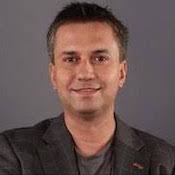
outgoing board member
Francesco Cesarini has worked with Erlang since 1995, helping shape its evolution from a niche telecom language into today’s thriving ecosystem of languages, frameworks, and communities. He began as an intern at Ericsson’s Computer Science Laboratory under Erlang co-creator Joe Armstrong before joining Ericsson’s training and consulting division, where he contributed to the first OTP release.
In 1999, shortly after Erlang became open source, Francesco founded Erlang Solutions to help companies adopt Erlang, later expanding into Elixir and Gleam. Over the past 25 years, he has supported organizations worldwide through consulting, education, conferences, and community-building initiatives.
Francesco is the co-author of Erlang Programming and Designing for Scalability with Erlang/OTP, has contributed to scientific publications, and has taught Erlang and distributed systems at universities and professional programmes, including the University of Oxford. Through training, conferences, online learning, and community work, he has helped educate and mentor thousands of developers across the global Erlang and Elixir ecosystem.
Why vote for him?
I have spent three decades helping grow the Erlang ecosystem — not only through technology, but through community, education, and collaboration.
When the community said there were not enough books, I encouraged others to write and co-authored books myself. When universities were not teaching Erlang (and Elixir), I started lecturing and encouraged academic adoption. When the ecosystem needed more events and places for people to connect, I founded the Erlang Factory, helped grow the Erlang User Conference into what became Code BEAM Europe, and supported conferences and meetups around the world, including helping Jim Freeze and the team behind ElixirConf EU. Under my leadership, we took over and started running Elixir Conf US.
I believe ecosystems grow when people invest in others. Throughout my career, I have focused on enabling contributors, connecting communities, mentoring newcomers, and helping create opportunities for individuals and companies to succeed with Erlang and Elixir.
The Erlang Ecosystem Foundation itself grew out of conversations between myself, Erlang co-inventor Mike Williams, and members of the IEUG who recognized the need for a shared organization to support the future of the ecosystem. Building the EEF has taken persistence, collaboration, and trust across many companies, communities and people, and I am proud of what we have achieved together.
As a board member, I have focused on sponsorship, fellowships, outreach, ecosystem growth, and acting as a facilitator across working groups and initiatives. I have also used my network, conferences, company resources, and industry connections to help amplify the work of the Foundation and support contributors wherever possible.
Most importantly, I believe the EEF succeeds because of the people behind it. The Foundation is the result of many passionate individuals working together across Erlang, Elixir, Gleam, and the wider BEAM ecosystem. I would be honored to continue contributing to that shared effort and helping ensure the ecosystem remains innovative, welcoming, and sustainable for the next generation of developers.
Nathan Hessler

I’ve been a software developer for about 20 years, primarily working in Ruby. I joined the Elixir community in 2016 — founding DC |> Elixir that same year — and have spent the years since attending conferences, building personal projects, and running meetups. I started working in Elixir professionally in 2023 through my consultancy, Convivial Tech. And as of last year, I organize ExMex in Austin, TX.
Why vote for him?
I won’t claim deep expertise in Erlang or Elixir internals; far more qualified people exist for that. What I bring is different: years of engineering leadership supporting teams (including Elixir teams at scale), enough hands-on Elixir work to understand the developer experience from the inside, and a long track record of doing the behind-the-scenes work of community organizing.
And while my background is Elixir-focused, the EEF exists to serve the entire BEAM ecosystem — Erlang, Elixir, Gleam, and others. I’d approach the role with that breadth in mind: listening to communities where I have less natural visibility, and being careful not to let Elixir-shaped instincts narrow decisions that should serve everyone.
The board needs people who can do the work of governance — show up to meetings, support working group leads, and help the foundation operate well so that the Erlang and Elixir experts can focus on shaping the ecosystem’s technical direction. That’s where I think I can be most useful.
I’ve spent the better part of the last decade in roles where supporting other people’s work was the work. I’d be glad to bring that orientation to the EEF.
Amos King
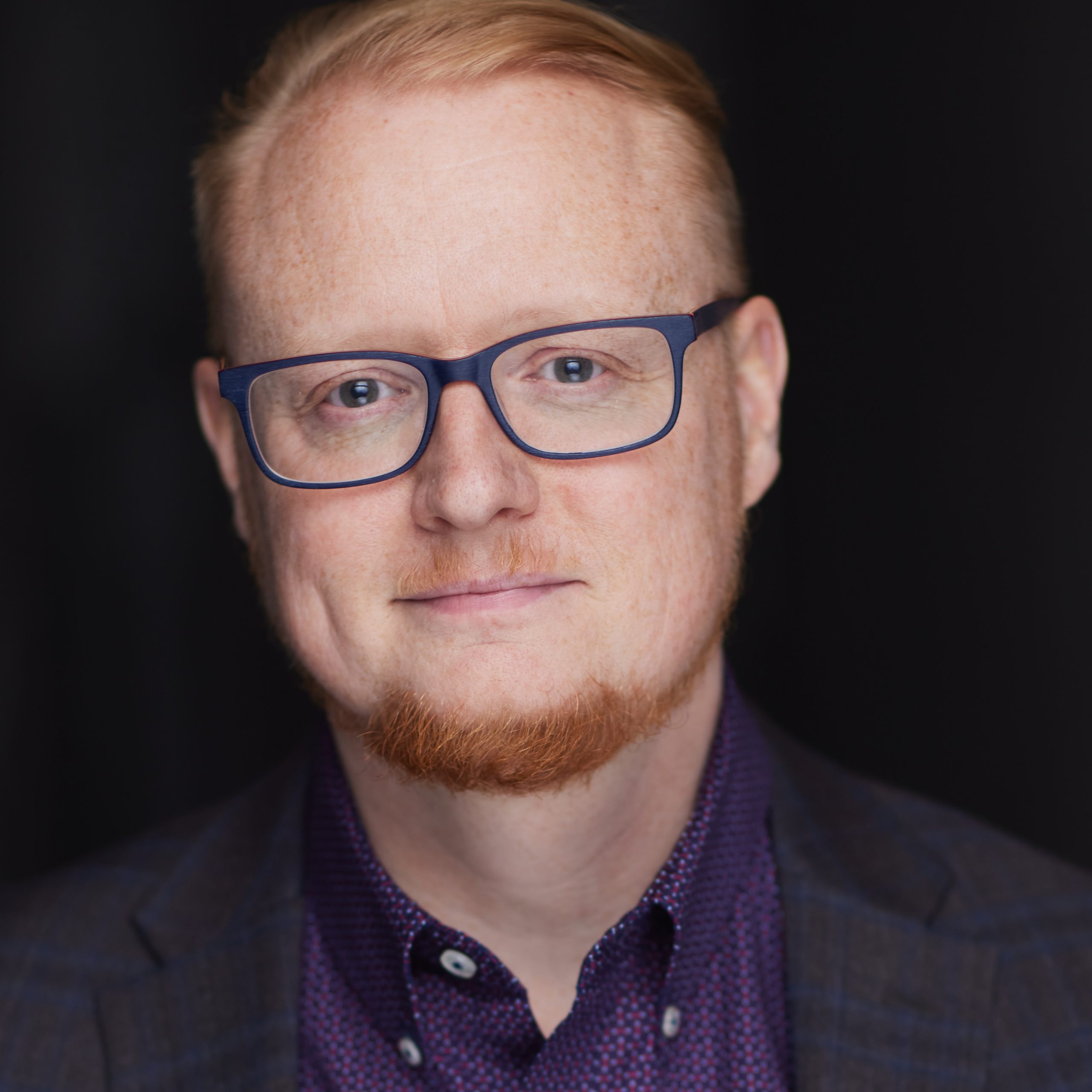
outgoing board member
Amos is the founder of Binary Noggin, Sr. Staff Engineer at Adobe, sponsor of EEF, and many conferences in the ecosystem. Amos is also the host of Elixir Outlaws, where he tries to ensure that the community is open and fun for all. Amos has been a member of EEF since 2019 and is part of the marketing workgroup. Amos frequently speaks at conferences like GigCity Elixir, Lonestar Elixir, ElixirConf, and CodeBEAM. In his free time, he’s active in the Elixir community as a mentor, meetup organizer, and book reviewer. Amos loves the BEAM and wants to help ensure its continued growth. Amos has also served on the programming committee for CodeBEAM multiple times. Amos has even driven hours to be in person at BEAM meetups.
Why vote for him?
I am interested in BEAM technologies’ growth and enjoy working with others. I am both a developer and proprietor of a company. This experience puts me in a position to understand the technical aspects of the BEAM and the business aspects of ensuring its continued growth. As a consultant, I have the perspective of many companies in mind that can help promote and push the BEAM in directions that are needed by all. The EEF would benefit from my love of working with others and my connections outside the BEAM community.
Greg Mefford

I’ve been involved in the Elixir community since around 2015 and working professionally in Elixir since around 2018. I’m a former member of the Nerves core team - you might remember me as the guy who personally welcomed every new member to the Slack channel back in the day! Outside of embedded systems, I’m interested in observability and I’ve been working on the EEF Observability Working Group since it was formed. I was the primary maintainer of the Spandex library (originally created by Zach Daniel) before moving on to help with its replacement, OpenTelemetry. I currently work at Adobe, primarily on the backend that powers the Frame.io product.
Why vote for him?
I really care about the EEF succeeding in its mission, not only because I’ve built a career on it personally, but because I think it’s supporting a fundamentally important technology for the future. The BEAM is truly special as a runtime for building the kinds of apps that need to be built today and in the foreseeable future, in terms of scalability, fault-tolerance, and cognitive burden for developers (and LLMs) who need to interact with it. I have a knack for administration and making workflows and decisions transparent in writing, which I’ve seen to be one of the key skills that are lacking in organizations that struggle to achieve or even clearly understand their mission.
Duane Strikwerda
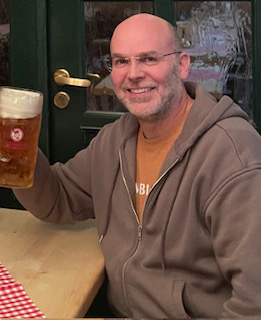
I would like to throw my hat in the ring as a practical business adoption candidate focused on helping organizations understand, choose, operate, and sustain Erlang, Elixir, and the BEAM.
I have a little over ten years of Elixir (some Erlang) and BEAM experience in business environments, alongside a long career in software development, technical architecture, systems integration, and IT leadership. As Director of Information Technology, I lead IT strategy across a global organization of 28 offices, with responsibility for teams, systems, budgets, delivery, security, and operational reliability.
That experience shapes my view of the BEAM ecosystem. Adoption requires more than technical strength. Organizations need to understand the value, manage the risks, build internal capability, and see a credible path to long-term success.
Why vote for him?
The BEAM is strong where many businesses need strength: reliability, concurrency, fault tolerance, maintainability, and operational resilience. I would like to help the EEF communicate these strengths and support the ecosystem in ways that hopefully would make adoption easier for companies and teams. I bring practical business experience, technical judgment, and an understanding of how technology decisions are made inside organizations.
Alistair Woodman
outgoing board member and current president
High-tech plumber. I have been working in the networking space since the 1980s. Product management jobs at Apple and Cisco kept him busy for over 20 years. For the last 10+ years he has been an angel investor, startup entrepreneur, as well as providing business development support for several open-source projects. His relationship to the BEAM community started over 15 years after getting to know the team at Tail-f. He is a board member of the Erlang Ecosystem Foundation.
Why vote for him ?
I’m happy to help the community. I have connections to many open source projects and standards bodies and I have experience with not-for-profit as well as for-profit companies; their boards; and the process and bureaucracy associated with running such companies.
Since I first became aware of EU Cyber Resilience Act (CRA) in late 2022, I have been working to strengthen the BEAM community access to security related funding and regulatory access. Over the last two years we have made great progress with becoming a CNA and setting up the Ægis project. The ‘fun’ has however only just started and the advent of AI identified and exploitable security vulnerabilities will require even more infrastructure and funding.